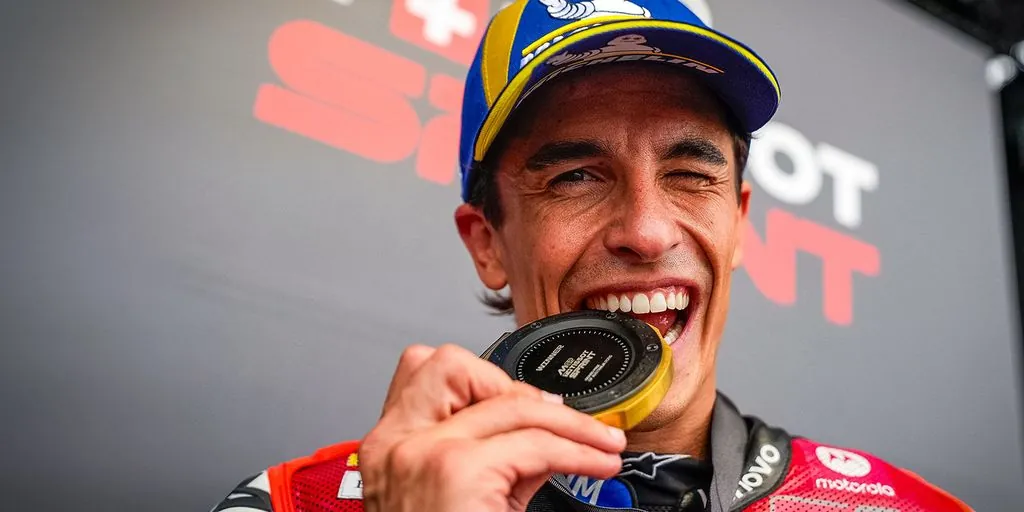
The championship lead changed hands at Phillip Island because the two contenders came away with very different results. Marc Marquez won the Sprint, his ninth Saturday victory of the season, while Jorge Martin crashed out of second at Turn 8 on lap eight. The report titled Marc Marquez Takes Title Lead as Martin Crashes Out in Phillip Island Sprint traces the fight that preceded the crash.
Martin had already taken the lead once, so the final result tells only part of the story. He was still pursuing Marquez when he went down. Alex Marquez and Fabio Di Giannantonio finished second and third, giving Ducati the entire podium. For Martin, the consequences extended beyond the Sprint: his injury also ruled him out of Sunday's Grand Prix.
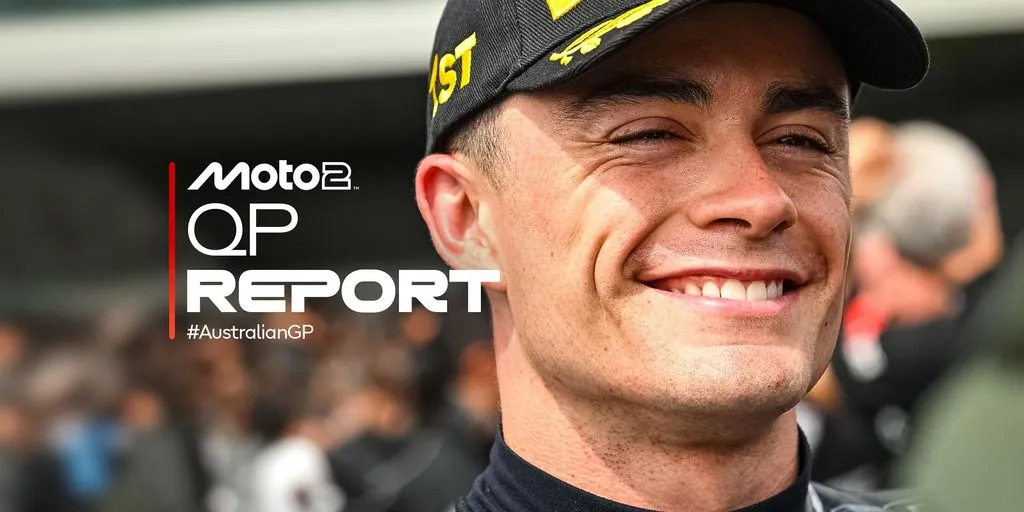
Phillip Island's sweeping layout often creates dramatic qualifying sessions, and the October 2026 Australian Grand Prix Moto2 round proved no exception. During the second qualifying session, local rider Senna Agius established provisional pole before crashing heavily at Turn 8 on an out lap with roughly four minutes remaining. The local yellow flags triggered by the crash neutralized improvements through the sector, severely compromising flying runs for several pursuing riders including David Alonso, Taiyo Furusato, and Izan Guevara.
Timing and track position determined who could maximize their pace before the sector became restricted. Both championship leader Manuel Gonzalez and Barry Baltus cleared the incident zone ahead of the caution, allowing Gonzalez to log an unchallenged 1:30.122 benchmark to take pole position by 0.106 seconds over Baltus. This pole marked Gonzalez's tenth in Moto2, coming on the exact weekend of his centenary milestone.
Grid Implications for the Title Fight
In the final push after the caution area stabilized, slipstreaming reshaped the second row. Filip Salac leveraged a tow behind title challenger Guevara to leap to third place with a 1:30.237, pushing Ivan Ortola and Holgado down to fourth and fifth. Guevara recovered enough ground to secure sixth place, remaining within 0.155 seconds of the top time despite the track disruption.
The tightly packed field saw the top ten riders separated by only 0.212 seconds, with Agius's initial effort holding up for seventh position ahead of Huertas, Alonso Lopez, and Tony Arbolino. The session outcome, reported as Manuel Gonzalez Claims Australian GP Moto2 Pole for 100th Grand Prix, positioned the points leader on the front row to defend a narrow 5.5-point margin over Guevara for Sunday's race.
The 2026 European Rally Championship reached its conclusion at Rally 6 Cities North of Portugal on 23–25 October, staging its operations across a specific northern corridor. With headquarters based in Fafe and the ceremonial start and finish hosted in Guimarães, the gravel itinerary required competitors to tackle 17 stages covering a total of 181.10 competitive kilometres.
Heading into the weekend, the overall championship had already been sealed by Teemu Suninen in September, yet significant positional battles remained across multiple classes. In the fight for overall championship runner-up during the ERC Portugal finale: Mabellini held an eight-point margin over Miko Marczyk while avoiding any requirement to drop scores, facing off across an entry list featuring 31 Rally2 crews.
Surface demands and autumn conditions
Running on gravel late in the autumn brought its own variables to northern Portugal. While not a definitive weather forecast for the weekend, driver assessments noted the general unpredictability of late-October conditions in the region, adding an extra layer of caution for crews managing title stakes.
The gravel test also marked a high-pressure platform for deciding the Junior ERC, ERC4, and teams championships. Opel teammates Timo Schulz and Tom Heindrichs contested both junior-level crowns over the 181.10 kilometres, demanding careful execution across the demanding Portuguese stages rather than outright, unfocused pace.
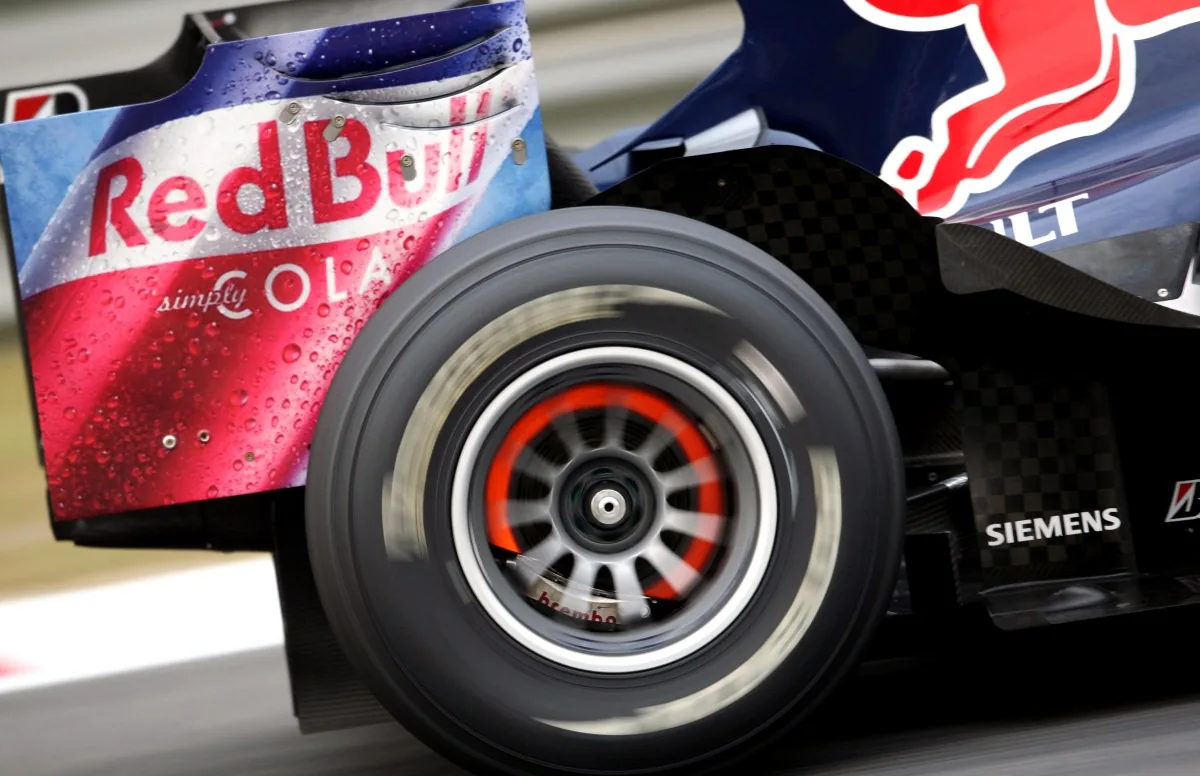
Trackside observers often notice the wheel assemblies lighting up as cars decelerate from high speed into tight corners. Understanding Why F1 brake discs glow red comes down to severe friction between the pads and carbon discs, which generates enough thermal energy for the material itself to emit visible light. While this luminous effect is often easier to spot during twilight or night running, the underlying physical process occurs whenever extreme stopping forces transfer kinetic energy into intense heat.
Operating ranges and structural demands
The temperatures reached under peak deceleration can be substantial. In a January 2014 overview of Formula 1 brake technology, Auto123 noted that carbon disc temperatures could climb past 1,200 degrees Celsius in the most punishing braking events, though that figure reflects extreme peaks rather than a universal requirement for visible light. Endurance racing references from the 24 Hours of Le Mans similarly illustrate that carbon discs can begin displaying a faint red glow around 600 degrees Celsius, becoming noticeably brighter as temperatures pass 1,000 degrees Celsius.
Carbon-carbon composites are selected for these systems because they handle severe thermal gradients, thermal expansion, and repeated heating and cooling cycles across a race stint. At the same time, race brakes do not function efficiently when cold, meaning engineers must balance heat retention against heat rejection.
Ventilation and system preservation
A visible glow does not automatically indicate that a component is failing or in distress. A red disc remains an expected part of hard use as long as operating temperatures stay within designed design boundaries. Ventilation holes drilled through the discs allow trapped thermal energy to escape into passing airflow between deceleration zones.
The real danger arises when heat dissipation cannot keep pace with repetitive heavy stops. Unchecked temperatures running beyond safe thresholds accelerate disc and pad wear while significantly diminishing braking efficiency.
The Suzuka Circuit served as the battleground for consecutive title-deciding collisions between Ayrton Senna and Alain Prost in 1989 and 1990. Their clashes at the Japanese Grand Prix turned an already fierce team rivalry into an enduring benchmark for debates regarding driving standards and championship tactics.
While Senna later admitted that the 1990 turn-one collision was deliberate retaliation, the 1989 chicane incident remained entangled in team politics and administrative rulings. Retaining the specific season context of these events illustrates how single-track flashpoints can define broader sporting disputes, an angle central to GamerKoala's retrospective on the Top 10 Most Controversial F1 Drivers of All Time (2025 Edition).
Differing Standards of Controversy
Suzuka also provided the backdrop for a very different form of controversy during the 1976 season finale, where Niki Lauda withdrew from the Japanese Grand Prix after deeming the track conditions too unsafe to race. In contrast to intentional collisions or sporting penalties, Lauda's decision highlighted how safety concerns and driver agency generated intense public and team debates.
Whether through calculated championship collisions like those involving Senna and Prost, or principled withdrawals over driver safety, track-specific decisions at Suzuka have repeatedly challenged regulatory oversight and public perceptions of acceptable competition.
The track itinerary at the Circuit of the Americas directly dictates how media responsibilities fit into the running day for the 2026 event. Following opening practice from 12:30 to 13:30 local time on Friday 23 October, a one-hour buffer precedes the official team representatives gathering. In the preview published for the United States GP: Newey, McNish and Budkowski are scheduled to appear together from 14:30 to 15:30 Austin time, speaking respectively for Aston Martin, Audi and Cadillac before second practice begins at 16:00.
Formula 1 notes that all timetable listings represent local track time, five hours behind UTC, while remaining subject to change. Inserting the technical and leadership conference neatly into the ninety-minute gap between practice runs allows team personnel to fulfill official media commitments without overlapping track action.
Driver Line-Ups and Results-Based Media Rallies
Before cars take to the Austin circuit, driver media duties open the weekend on Thursday 22 October. Six drivers are slated across two published slots at 13:30 and 14:00: Oscar Piastri representing McLaren, Isack Hadjar for Red Bull, Carlos Sainz for Williams, Valtteri Bottas for Cadillac, Lewis Hamilton for Ferrari, and Kimi Antonelli for Mercedes. The published bulletin does not resolve which driver occupies which specific half-hour slot or explicitly designate a timezone for Thursday.
Once competitive running begins, fixed roster announcements end. Saturday qualifying from 16:00 to 17:00 feeds directly into an expected 17:00 to 18:00 media window reserved strictly for the three fastest qualifiers. Following Sunday's 15:00 Grand Prix start, post-race press obligations feature the top three podium finishers, leaving the exact conference start time dependent on the race duration.
When track conditions force officials to display a red flag during a Grand Prix, the total laps completed by the race leader determine whether competition resumes. Under the FIM 2026 Grand Prix World Championship Regulations updated in September 2026, the milestone for declaring an official finish is three-quarters of the original distance, rounded down to whole laps. If the leader has reached that mark, the contest is declared complete and awards full championship points. If the stoppage happens earlier, Race Direction evaluates whether to resume.
When fewer than three laps have been logged by the leader, the initial outing is deemed void. The field resets for an entirely new race shortened by one lap from the original distance, using the original starting grid and reapplying pre-race penalties. If the leader managed at least three full laps but fell short of the rounded-down three-quarters threshold, the event pauses for a restart over whatever laps remain to reach the initial distance, subject to a mandatory five-lap minimum.
Pit Lane Timing and Restart Eligibility
Eligibility to rejoin the track depends strictly on a rider's status at the moment of interruption. In the formal MotoGP red flag restart rules, an interrupted race that ran for at least three laps only allows classified finishers back onto the grid. Classification requires that a rider was actively competing—either riding or actively attempting to restart, repair, or bring a viable machine back—when the red signal appeared. FIM MotoGP Stewards hold sole authority over active status, and their ruling cannot be appealed.
Riders must also enter the designated pit-lane timing line with their motorcycle within five minutes of the red signal being shown, barring exceptional exemptions granted by officials. Teams are permitted to repair machinery, swap bikes, and refuel during the pause. The resulting grid mirrors the classification order calculated from the interrupted race, though riders classified a full lap down are relegated to starting from the pit lane.
Interrupted Results and Points Allocation
To establish order after a red flag, timekeepers locate the final point where the leader finished a lap before the signal. Riders crossing the line on the leader's lap are classified at that mark, whereas those who had not yet crossed receive their classification from the end of the previous lap. If an interrupted race of three or more laps cannot be restarted, this calculated classification becomes the final result.
Points distribution in abandoned events hinges on distance. If the leader completed at least half of the original scheduled laps—rounded down—full championship points are awarded. If the stoppage occurs between three laps and that 50 percent threshold, half points are awarded instead. Should an event halted before three completed laps prove impossible to restart, the race is cancelled with no points awarded.