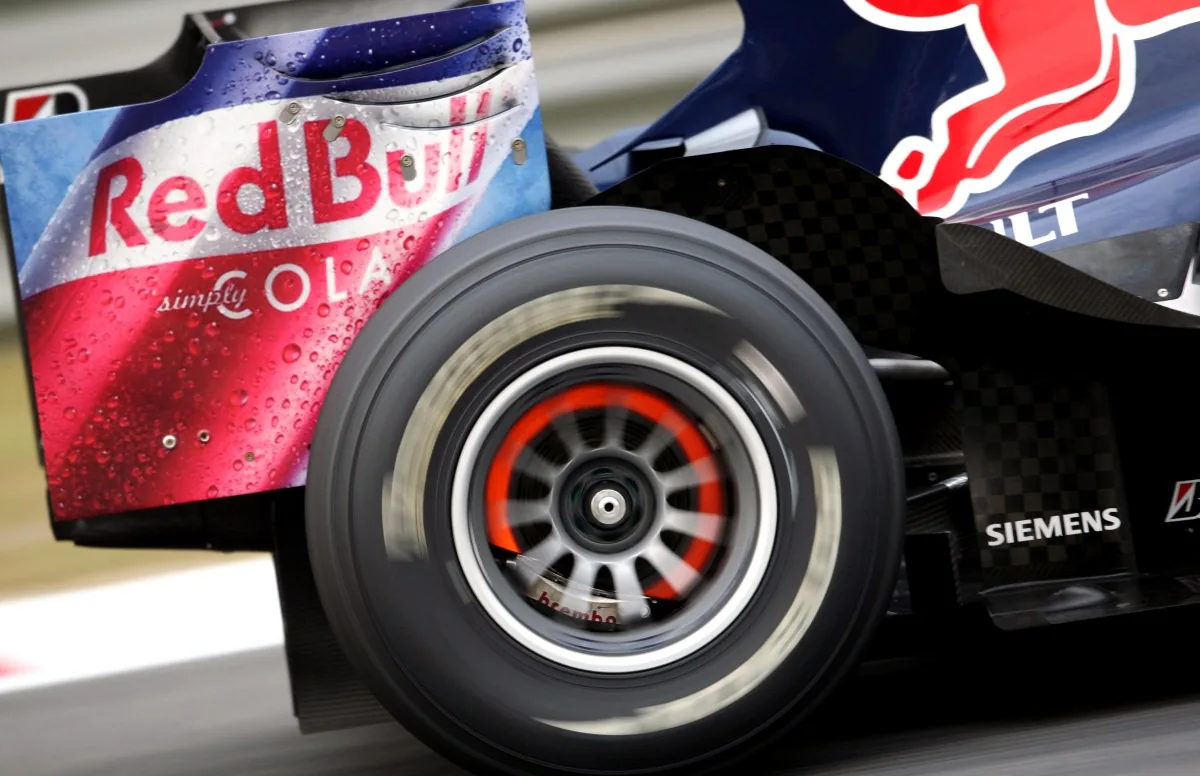
Friction and visible thermal radiation
Trackside observers often notice the wheel assemblies lighting up as cars decelerate from high speed into tight corners. Understanding Why F1 brake discs glow red comes down to severe friction between the pads and carbon discs, which generates enough thermal energy for the material itself to emit visible light. While this luminous effect is often easier to spot during twilight or night running, the underlying physical process occurs whenever extreme stopping forces transfer kinetic energy into intense heat.
Operating ranges and structural demands
The temperatures reached under peak deceleration can be substantial. In a January 2014 overview of Formula 1 brake technology, Auto123 noted that carbon disc temperatures could climb past 1,200 degrees Celsius in the most punishing braking events, though that figure reflects extreme peaks rather than a universal requirement for visible light. Endurance racing references from the 24 Hours of Le Mans similarly illustrate that carbon discs can begin displaying a faint red glow around 600 degrees Celsius, becoming noticeably brighter as temperatures pass 1,000 degrees Celsius.
Carbon-carbon composites are selected for these systems because they handle severe thermal gradients, thermal expansion, and repeated heating and cooling cycles across a race stint. At the same time, race brakes do not function efficiently when cold, meaning engineers must balance heat retention against heat rejection.
Ventilation and system preservation
A visible glow does not automatically indicate that a component is failing or in distress. A red disc remains an expected part of hard use as long as operating temperatures stay within designed design boundaries. Ventilation holes drilled through the discs allow trapped thermal energy to escape into passing airflow between deceleration zones.
The real danger arises when heat dissipation cannot keep pace with repetitive heavy stops. Unchecked temperatures running beyond safe thresholds accelerate disc and pad wear while significantly diminishing braking efficiency.
Official reference: Formula 1 official news and results.




No comments:
Post a Comment