Trackside Signals and Immediate Mechanical Stoppages
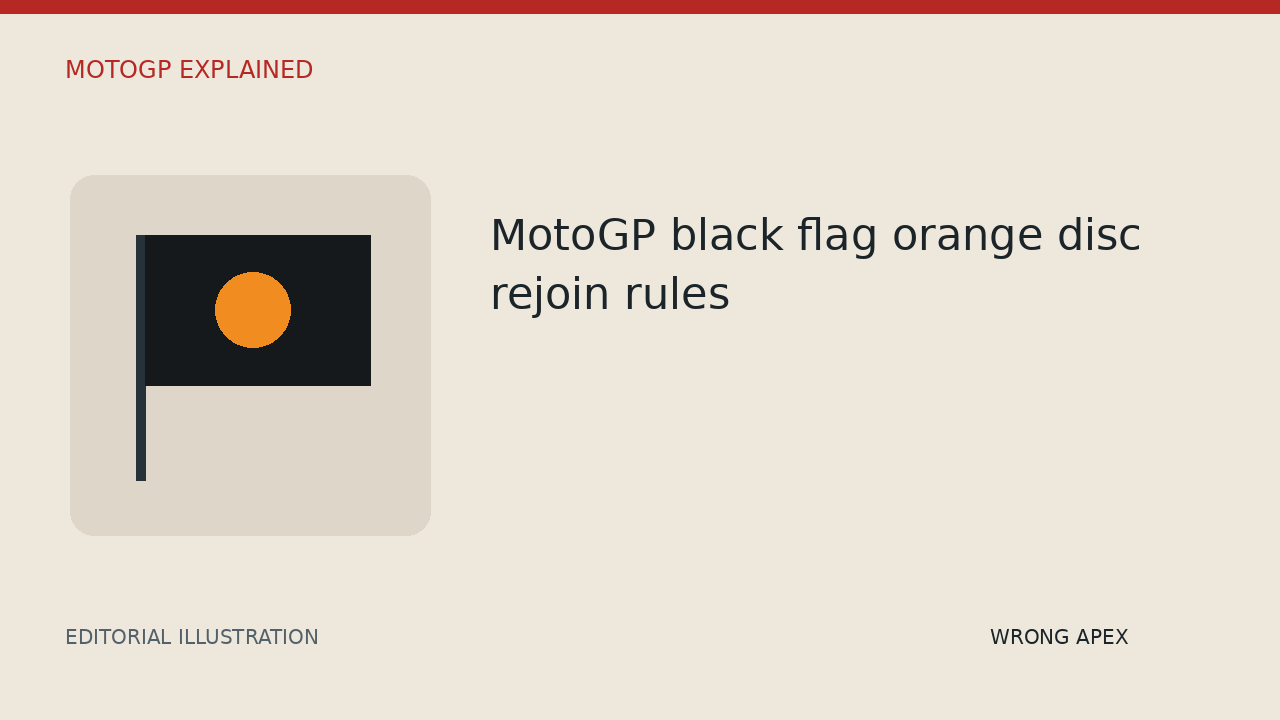
During a Grand Prix weekend, marshals and digital light panels monitor machinery closely for dangerous failures. When race direction identifies a motorcycle suffering from a mechanical issue likely to endanger the rider or others, officials display a black flag with an orange disc alongside that competitor's racing number. Unlike standard operational warnings, this signal requires the rider to leave the circuit immediately rather than circulating back around at racing speeds.
Authorisation and Contrasting Flag Instructions
Exiting the racing surface does not automatically terminate a rider's session, but repairs alone are not enough to resume running. Under 2026 FIM Grand Prix regulations updated that September, the MotoGP black flag orange disc rejoin rules mandate that a rider may only return to the circuit after receiving explicit authorisation from an official. Trackside light panels carry the same regulatory authority as physical flags, ensuring competitors receive notice even if visual panel characteristics vary slightly from fabric displays.
This process differs sharply from a plain black flag issued for sporting penalties, which directs a rider to enter the pits at the end of the current lap without permission to restart. Marshals may also utilise a plain black flag for non-penalty situations, such as addressing non-hazardous transponder faults or instructing late runners on the warm-up lap behind the safety car to divert into pit lane.
Official reference: official MotoGP guide to flag meanings.




No comments:
Post a Comment